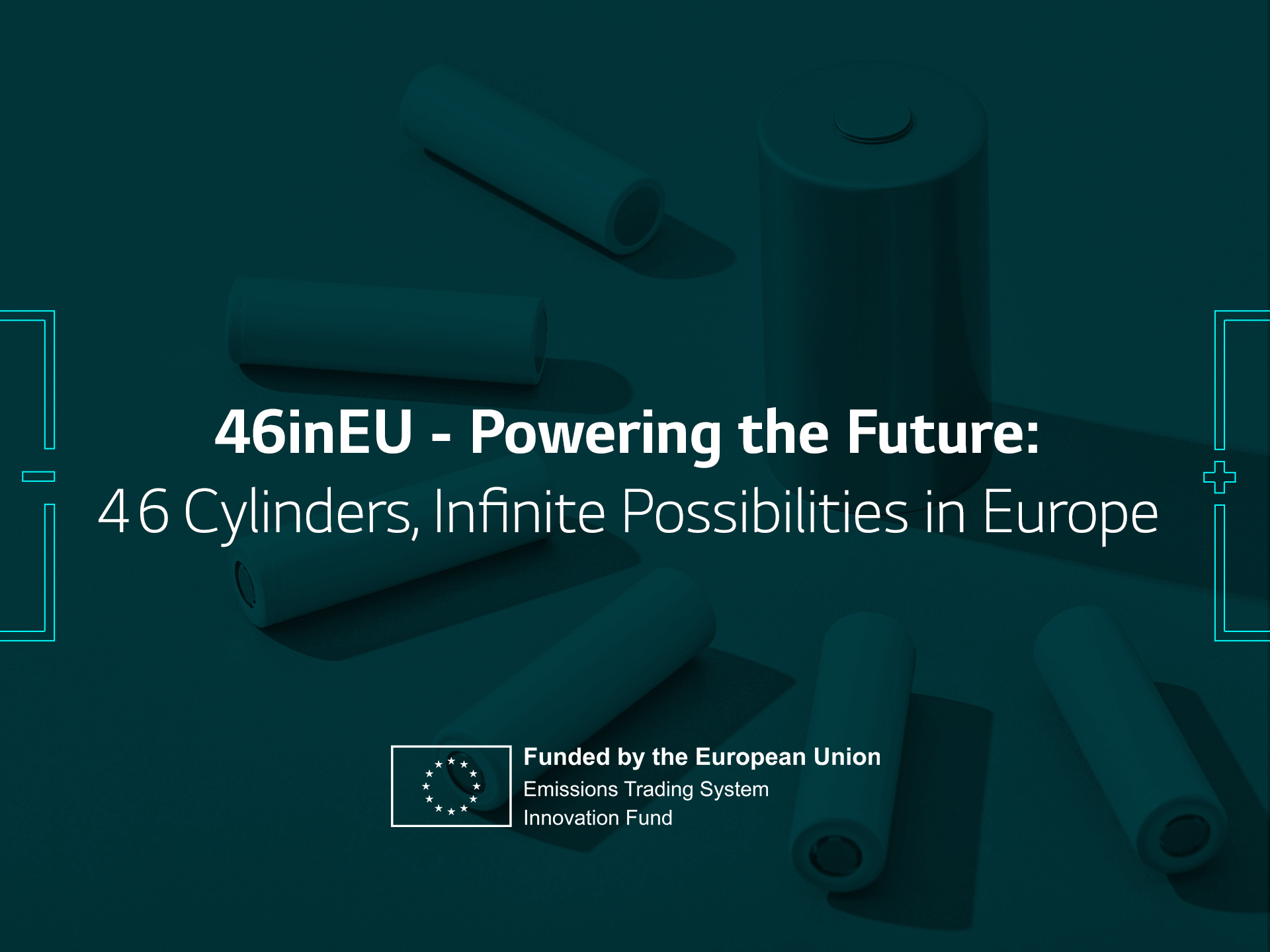
- LG Energy Solution Wrocław is launching the 46inEU project, which aims to advance electric vehicle battery technology with next-generation 46-series (46mm diameter cylindrical battery cells).
- Advanced battery technologies and more sustainable European production strengthen the EU’s industrial resilience and strategic autonomy, support local manufacturing of next gen cells, reduce import dependence, and reinforce the region’s position in the global battery value chain.
- This project will reduce Europe’s reliance on external battery suppliers, enhancing the competitiveness of Poland and the EU while supporting industrial independence and supply chain security across the region and fostering local innovation and economic growth.
- The project marks an important step toward climate neutrality while reinforcing the Wroclaw facility as a leader in sustainable e mobility solutions in Europe.
Biskupice Podgórne, February 27, 2026 – LG Energy Solution Wrocław signed an agreement with the European Commission for the ‘46inEU project’ last year and is now moving forward with its implementation. The 46inEU initiative aims to achieve a breakthrough in electric vehicle (EV) battery technology by introducing a new generation of 46‑series cylindrical lithium‑ion cells.
The company’s plant in Biskupice Podgórne will play a crucial role, expanding production lines to mass-produce 46 series cylindrical batteries with an annual capacity of around 12GWh (approximately 90 million cells). This will support rapid entry into the premium EV market. The new batteries boast higher energy density, improved fast‑charging, and enhanced safety.
LG Energy Solution is proceeding with procedures to finalize this investment.
LOWER SILESIA AS A EUROPEAN E MOBILITY HUB
The first production line in Poland – and in Europe – dedicated to 46‑series cylindrical battery cells will contribute not only to the wider adoption of EVs but also to the EU’s ambitions of promoting sustainable transport and reducing carbon emissions.
“We are moving forward with the 46inEU project, one of five innovative battery initiatives co-funded by the European Union under the Innovation Fund. Our goal is to strengthen Europe’s technological independence and reduce reliance on imported components. By implementing advanced manufacturing solutions locally, we aim to help build a sustainable and competitive battery industry in Europe that contributes significantly to the regional economy.
Sanghun Lee, president of LG Energy Solution Wrocław
The project implemented at the LG Energy Solution Wrocław facility in Biskupice Podgórne, in the Lower Silesia region, will also have a significant impact on the local and regional economy.
SUSTAINABLE TRANSPORT AND CO₂ EMISSIONS REDUCTION
The 46inEU project goes beyond existing technological standards by introducing an innovative production process. The new cell design and improved welding technique enhance electrical conductivity, improve heat dissipation, and increase the overall durability of batteries. As a result, 46‑series cells offer five times the capacity of 21‑series cells.
The project also incorporates high‑capacity NCMA (nickel-cobalt-manganese-aluminium) cathode chemistry and high‑efficiency silicon anodes, which will extend battery life and improved performance. These solutions will enable the plant to reach new levels of production efficiency in a short timeframe.
The new battery technology is expected to avoid 20,611,980 tons of CO₂ emissions over the first ten years of operation – equivalent to the annual emissions of more than four million passenger cars. The project will help reduce greenhouse‑gas emissions by 77.68% compared to reference scenario, significantly lowering the carbon footprint of battery manufacturing.
ACCELERATING TRANSPORT DECARBONISATION
Importantly, the proposed technology will support cleaner and more efficient electrification of transport and energy systems – two key pillars of the European Green Deal and the EU’s climate‑policy objectives. By accelerating the decarbonisation of transport and reducing dependence on fossil fuels, the project contributes to the EU’s goal of achieving climate neutrality by 2050.